SHIPPING ORDERS FOR CHRISTMAS WILL BE AVAILABLE AFTER THANKSGIVING
TO SHIP FOR THE 2027 MARDI GRAS KING CAKE SEASON, THOSE DATES WILL BE AVAILABLE AFTER DECEMBER 27, 2026
The Ultimate Guide to the History of King Cake
King cake is one of those foods that feels like it has always existed, like it simply belongs to winter and early spring the way cold mornings belong to hot coffee. You see it in office break rooms, on kitchen counters, and at parties where someone swears they are only having one small slice before grabbing another. Even people who do not follow every detail of Mardi Gras season somehow know the rule about the hidden baby, because king cake has a way of turning a regular day into a little event. That mix of tradition, surprise, and pure comfort is the reason it has survived for centuries.
Why King Cake Still Matters Today
King cake is more than a dessert because it functions like an edible calendar that tells you what season you are in. When the holidays end, king cake shows up and reminds everyone that winter still has something to celebrate, even if the weather is gray and the days feel short. It also gives people a shared tradition that feels casual, meaning you do not need a formal invitation to participate. You just need a fork, a napkin, and a willingness to laugh when someone finds the baby.
The Ancient Roots of a “Kingly” Bread
The earliest roots of king cake are tied to seasonal feasts that existed long before anyone in Louisiana was tinting sugar green, purple, and gold. In many ancient cultures, midwinter celebrations included special breads or cakes that marked a turning point in the year, when darkness began to loosen its grip, and people looked ahead to spring. These foods often had a symbolic meaning, such as prosperity, renewal, or good fortune for the household. Even when the ingredients were simple, the message was big: this is a time to gather, share, and hope.
As Christianity spread across Europe, many older seasonal customs were absorbed into religious holidays, which is how you get traditions that feel both sacred and festive at the same time. A “kingly” bread made sense in a world where feast days were major events, and where a meal could carry a message as clearly as a sermon. The idea of crowning someone, even playfully, fit right into communities that loved pageantry and storytelling. Those habits created fertile ground for a dessert that could honor a holy day while still feeling like a party.
What Does Epiphany Have to Do With King Cake?
In many parts of Catholic Europe, Epiphany was a bigger deal than modern Americans realize, and it carried a cozy, communal vibe that fit winter perfectly. People used the holiday as a reason to keep the festive season going a little longer after Christmas, especially in places where cold weather limited travel and outdoor work. A special cake or bread became the center of the gathering, because sharing food is the easiest way to turn a religious holiday into a memorable family tradition. King cake, in that sense, became a sweet symbol of Epiphany itself.
France’s Galette des Rois and the Rise of the Hidden Token
One of the most influential ancestors of today’s king cake is the French galette des rois, which is traditionally eaten around Epiphany. In much of France, the galette is a round pastry, often filled with almond cream, that looks elegant and simple compared to the bold Louisiana style. The key feature, though, is not the shape or filling, because it is the hidden token baked inside. Whoever finds it becomes “king” or “queen” for the day, sometimes wearing a paper crown that comes with the pastry.
That hidden token is often called the fève, a word that originally referred to a bean. Early versions truly did use a dried bean, because it was easy, inexpensive, and symbolic in its own rustic way. Over time, bakers began using small porcelain charms instead, which made the tradition feel more special and collectable. The concept stayed the same, though: the cake creates a playful moment of chance, and the group responds by honoring the winner. That simple game is one of the reasons king cake never feels boring, even when you have eaten it every year of your life.
Spain and the Wider World of Three Kings Cakes
France is a major piece of the king cake story, but Spain and Spanish-speaking cultures also have strong Three Kings traditions that shaped how the custom spread and evolved. In Spain, roscón de reyes is a classic Epiphany dessert, usually a sweet, ring-shaped bread decorated with candied fruit that resembles jeweled crowns. In Mexico and many other parts of Latin America, rosca de reyes carries a similar meaning, and it often includes small figurines hidden inside. The person who finds the figurine may be responsible for hosting another gathering later, which turns dessert into a social contract in the best possible way.
How King Cake Traveled Across the Atlantic
King cake traditions arrived in the Americas through immigration, colonization, and the movement of people who carried their celebrations with them. French settlers, Spanish settlers, and later waves of immigrants all brought food customs that made their new homes feel familiar. When people relocate, holidays become even more meaningful, because they help preserve identity when everything else feels new. A cake tied to Epiphany was a perfect example of a portable tradition, since it required basic ingredients and a willingness to gather.
Louisiana, with its French and Spanish colonial history, became an especially natural home for these customs. New Orleans developed as a place where many cultures overlapped, and where religious holidays often blended with local flair. Once the Epiphany cake tradition took root, it had everything it needed to thrive: a city that loves celebration, a calendar full of social events, and a community that treats food as a form of storytelling. King cake did not just arrive in Louisiana, it found a place that matched its personality.
New Orleans Turns a European Tradition Into a Louisiana Icon
The transformation from old-world Epiphany cake to modern New Orleans king cake happened gradually, through countless kitchens and bakeries making small changes over time. Traditional European versions might be a pastry or a simpler bread, while the Louisiana king cake leaned into softness, sweetness, and shareability. The ring shape stuck around because it was familiar and symbolic, yet New Orleans bakers began adapting textures and flavors to match local tastes. Cinnamon-forward dough became common, and icing became part of the identity, not just a decorative afterthought.
Mardi Gras culture also played a huge role in making king cake feel like a season rather than a single holiday dessert. In many places, Epiphany is a day, but in New Orleans it is the beginning of a long stretch of celebrations that build toward Fat Tuesday. King cake became the edible mascot of that stretch, showing up at gatherings big and small while the city warmed up for parade season. This is why people in Louisiana talk about “king cake season” like it is a real thing you can feel in the air. The cake is not just part of the holiday, it is part of the momentum.
When Does King Cake Season Start and End?
In Louisiana tradition, king cake season starts on Epiphany, January 6, which is also known locally as Twelfth Night. That date marks the official beginning of Carnival season, which continues all the way until Mardi Gras Day. The season ends on Fat Tuesday, the day before Ash Wednesday, when Lent begins in the Christian calendar. This creates a clean timeline that feels almost ceremonial, because it turns king cake into a seasonal ritual you can count on every year.
The Baby, the Bean, and the Party: How the Hidden Prize Evolved
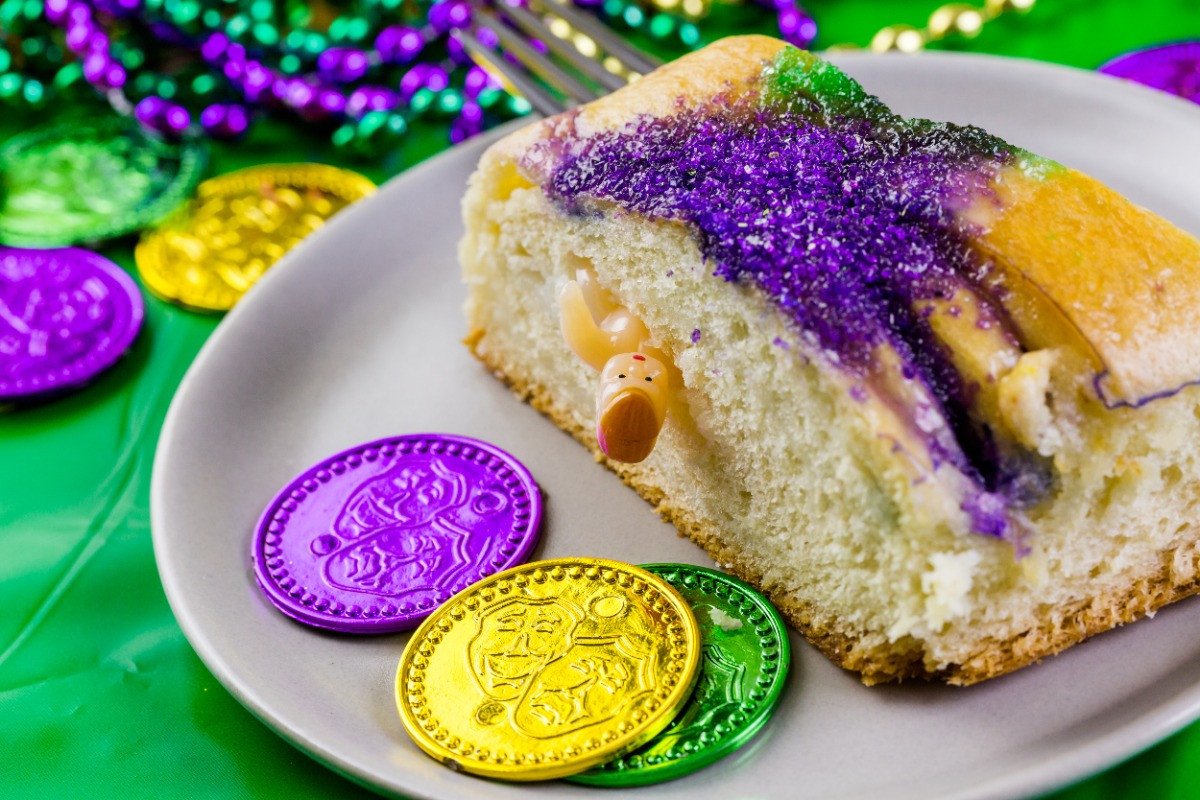
The hidden prize tradition is one of the most recognizable parts of king cake, and it has evolved a lot across time and geography. Early European versions used a dried bean, which was practical and symbolic, since beans have long been associated with luck and fertility in different cultures. Later, porcelain charms became popular, especially in places where craftsmanship and collectability added prestige to everyday traditions. Louisiana eventually became known for the tiny plastic baby, which is playful, a little weird, and completely unforgettable once you learn the rule.
The meaning behind the hidden baby is often explained as representing the infant Jesus, tying the tradition back to Epiphany and the Nativity story. At the same time, modern king cake culture leans into the social side of it, where finding the baby means you are “it” for the next responsibility. In many workplaces and friend groups, the person who finds the baby brings the next king cake, which keeps the season rolling forward. That is the genius of the tradition, because it turns a dessert into a community-building machine. People might forget birthdays, but they rarely forget that they owe the next king cake.
How King Cake Went From Simple Bread to Iced Ring
If you compare a modern Louisiana king cake to its older ancestors, the biggest difference is the deliberate indulgence. Earlier cakes were festive, but they often leaned more toward bread or pastry with subtle sweetness. Louisiana king cake embraced the idea that Carnival is supposed to feel rich and celebratory, which made a soft, sweet dough the perfect base. Cinnamon filling became especially common because it adds warmth and familiarity, and it pairs perfectly with coffee during the season’s cooler mornings.
Icing and colored sugar also became part of the Louisiana identity, turning king cake into something you recognize from across the room. The cake stops being just “something you eat” and becomes something you display at the center of a table. That visual impact matters more than people admit, because humans experience food with their eyes long before they take a bite. A king cake looks like a party even when the room is quiet, which is exactly what Carnival season is trying to do. New Orleans did not just sweeten the tradition, it made it louder.
The Colors of Mardi Gras and What They Represent
The classic Mardi Gras colors of purple, green, and gold are now inseparable from king cake, but their meaning comes from the broader culture of Carnival in New Orleans. These colors are traditionally associated with values like justice, faith, and power, and they show up everywhere during the season, from decorations to parade throws. King cake adopted them because it is the edible symbol of Carnival, and it needed a visual language that matched the city’s energy. The colored sugar is basically a flag you can eat.
Color also adds a sense of ceremony to something that is otherwise casual and messy in the best way. Cutting a slice feels more festive when the cake looks like a celebration, even if you are just standing in your kitchen in sweatpants. It also creates a shared expectation, because people know what they are looking for when someone says “king cake.” The colors signal that the tradition is alive and well, and that you are participating in something bigger than dessert.
King Cake in the 1900s: Bakeries, Neighborhoods, and Family Rituals
During the 1900s, king cake became more firmly established as a Louisiana seasonal staple, helped by the growth of neighborhood bakeries and a stronger sense of local identity. Families had favorite spots, and those loyalties could run deep, because the king cake you grew up with becomes part of your personal definition of “right.” In a city like New Orleans, food traditions are often inherited, meaning you do not just like a cake, you associate it with a person who introduced you to it. That kind of emotional connection turns a seasonal pastry into a family heirloom in edible form.
The century also brought changes in how people gathered, with office culture and larger public celebrations becoming more common. King cake fit perfectly into those shifts, because it is easy to share and easy to understand, even for newcomers. Someone can walk into a break room, see the cake, and immediately know the vibe is friendly and festive. In that sense, king cake became a social tool that helped communities stay connected as daily life modernized. Tradition survived because it adapted to new schedules and new settings without losing its heart.
How New Orleans Made King Cake a Carnival “Must-Have”
New Orleans did something special by linking king cake so closely to Carnival season, because it turned a religious holiday dessert into a cultural institution. In some places, the cake is a nod to Epiphany and then it fades away, but New Orleans kept it in the spotlight for weeks. This happened because Carnival is not a single day in the city, it is a season with its own build-up and rituals. King cake became the snack version of that build-up, showing up again and again as the anticipation grew.
The “must-have” status also comes from how king cake fits into the social structure of Mardi Gras. People host gatherings, attend parades, join krewes, and generally look for reasons to celebrate, even on regular days. King cake gives everyone a reason without requiring a big plan, because you can grab one, bring it over, and instantly create a moment. That ease is part of its magic, and it is why king cake remains one of the most consistent traditions in Louisiana life. It is both meaningful and effortless, which is a rare combination.
King Cake Becomes a New Orleans Business Icon
Once king cake became a seasonal necessity, bakeries started competing not just on flavor, but on identity. Some focused on classic cinnamon, others pushed fillings, and others built reputations on texture and freshness. This competition was not just about sales, because it was about becoming part of the city’s story. In New Orleans, food businesses often become cultural landmarks, meaning people talk about them the way other cities talk about famous buildings. A great king cake bakery becomes a memory for thousands of families at once.
This is also where the craft side of king cake really shines. A king cake is not complicated in concept, but it is easy to mess up in execution, especially when you are making them at scale. Dough has to stay tender, fillings have to be balanced, and icing has to be sweet without flattening everything into sugar overload. A bakery that does it right year after year builds trust, and in Louisiana, trust is everything when it comes to tradition. People want to know their king cake will feel like king cake, not like a random pastry trying to borrow the name.
The Randazzo Tradition and Why It Stands Out
Randazzo King Cakes sits right in the middle of this rich history, not just as a bakery but as a keeper of a New Orleans tradition that people take seriously. In a city full of strong opinions, a king cake that earns loyal fans has done something right, because locals are not shy about telling you what they love. Randazzo King Cakes carries the spirit of Carnival in every box, giving families and friends a way to celebrate that feels authentic, not mass-produced. When you bring a Randazzo king cake to the table, it feels like you understood the assignment.
A great king cake should taste like comfort and celebration at the same time, and that balance is harder to achieve than it sounds. Too dry and it feels forgettable, too sweet and it loses the warm, bakery-style personality that makes you want a second slice. Randazzo King Cakes delivers the kind of texture and flavor that keeps the tradition alive for people who grew up with it, while still welcoming newcomers who are tasting king cake for the first time. That is the real goal of a historic food, because it should honor the past while still making room at the table for new memories.
The Modern King Cake Era: Fillings, Flavors, and Big Creativity
Modern king cake culture has become more adventurous, and the variety is part of the fun. Classic cinnamon is still the foundation for many people, but newer versions include cream cheese, fruit fillings, and other twists that turn king cake into a choose-your-own-adventure dessert. Some purists prefer the original style, while others treat the season like a tasting tour, trying a new variation every week. Both approaches are valid, because the heart of the tradition is sharing, not gatekeeping.
Creativity also reflects the way New Orleans culture evolves without losing its roots. Carnival itself changes a little every generation, with new music, new themes, and new social traditions layered over the old ones. King cake follows the same pattern, keeping the recognizable shape and seasonal meaning while making room for modern taste preferences. The best modern cakes still respect what king cake is supposed to be: a gathering food that feels festive, soft, and generous. Trendy flavors come and go, but the feeling has to stay.
How King Cake Spread Beyond Louisiana
King cake has traveled far beyond Louisiana, partly because New Orleans culture has such a strong pull in American imagination. People visit the city, fall in love with Mardi Gras season, and then want to recreate a piece of that joy back home. Mail-order options and broader distribution also helped, because the cake is no longer limited to people who live within driving distance of a New Orleans bakery. King cake became something you could send as a gift, which fits perfectly with its identity as a shareable celebration food.
Outside Louisiana, king cake sometimes changes form, especially in places that already have their own Three Kings traditions. Some regions lean closer to the French pastry roots, others borrow the Louisiana colors, and others create hybrids that blend local flavors with the Carnival idea. The spread shows how adaptable king cake is, because it can be a religious holiday dessert, a Mardi Gras party centerpiece, or simply an excuse to bring people together in the middle of winter. The name stays the same, but the cultural meaning shifts depending on where you are. That is a sign of a living tradition, not a frozen one.
Are There “Rules” for Eating King Cake?
King cake has unofficial rules more than strict ones, and that is part of why it feels fun instead of intimidating. People usually agree that you start eating it after January 6 and stop after Mardi Gras, because that timeline is part of the culture. Many groups also agree that the baby brings responsibility, whether that means bringing the next cake, hosting a party, or at least accepting some playful teasing. These rules keep the tradition social, because they prevent the cake from becoming just another dessert you forget about after the first slice.
Etiquette also tends to follow common sense, even when people joke about it. You slice carefully, you watch for the baby, and you do not pretend you did not find it when everyone saw it in your fork. In offices and big gatherings, someone usually reminds the room to be mindful, especially if kids are around, because the tradition should be enjoyable for everyone. The best rule, though, is the simplest one: king cake is meant to be shared, which means it belongs in the middle of a table, not hidden in the back of the fridge. Traditions survive when people participate together.
The History of King Cake as a Story of New Orleans Itself
When you step back, king cake history mirrors the history of New Orleans in a surprisingly clean way. The city is built on layers of culture, shaped by French and Spanish influence, strengthened by faith traditions, and energized by an unstoppable love for celebration. King cake reflects all of that, because it started as a holiday cake tied to Epiphany and became a Carnival staple with unmistakable local personality. The tradition kept the old-world symbolism while embracing the new-world love of community gatherings and big flavor.
King cake also shows how New Orleans makes tradition feel welcoming instead of stiff. A cake that crowns someone king for a day could feel formal in another context, but here it becomes playful, warm, and a little chaotic in the best way. The baby in the cake, the colors on top, and the season-long rhythm all add up to something that feels like living culture. That is why king cake is not just “food history,” because it is a cultural biography you can eat. Every slice tells you something about the city that made it famous.
How King Cake Keeps Families Connected Across Generations
One of the quiet reasons king cake matters is that it creates continuity in family life, even when everything else changes. Kids learn the baby tradition early, and those memories stick because finding the baby feels like winning a tiny lottery. Adults keep buying king cake because it brings back those moments, and because it gives them a way to recreate the feeling for the next generation. It is a small ritual, but it is repeated enough that it becomes part of identity.
King cake also creates a seasonal checkpoint for families who do not get together as often as they want. Carnival season becomes a reason to visit, drop off a cake, or plan a weekend around parades and meals. Even when people move away, king cake becomes a way to stay connected to home, because a familiar flavor can feel like a reunion. Tradition is often just repetition with meaning, and king cake delivers that in a form that never feels boring. People do not keep coming back because they have to, they come back because it feels good.
What Makes a King Cake Feel “Right”?
A king cake feels “right” when the dough is tender, the sweetness is balanced, and the whole thing tastes like it came from a bakery that understands the season. Texture matters because king cake is supposed to be soft enough to pull apart easily, yet sturdy enough to hold filling and icing without collapsing. Flavor matters because it should feel warm and comforting, not sharp or overly artificial. Even the icing matters, because it needs to add sweetness and celebration without overpowering everything underneath.
The experience matters too, because king cake is supposed to feel communal. A cake that tastes good but does not feel shareable misses the spirit of the tradition. The best king cakes invite you to cut another slice, pour another cup of coffee, and keep talking a little longer. That is why people get loyal to the bakeries that do it well, because they are not just buying a dessert, they are buying the feeling of the season. King cake is less about perfection and more about comfort done with care.
King Cake Today, Tomorrow, and Every Carnival Season After
King cake will keep evolving, because living traditions always do, especially in a city as creative as New Orleans. New flavors will come, new decorating styles will trend, and new families will add their own little rituals to the season. The core, though, will stay the same: a cake tied to Epiphany, stretched across Carnival season, and built around the idea that celebration is better when you share it. That structure is sturdy enough to handle change without breaking. The next time you see a king cake, it might look like a modern dessert, but it carries centuries of history in a very real way. It connects European holiday customs to Louisiana culture, faith traditions to playful community rules, and family memories to new friendships made over a slice. That is a big story for a simple ring of dough and sugar, yet king cake has always been more than it seems. The best traditions hide depth under sweetness, and king cake has mastered that.
Bring King Cake Season Home With Randazzo King Cakes
Randazzo King Cakes is a delicious way to celebrate the tradition the way New Orleans intended: with warmth, sweetness, and the kind of quality people remember. Whether you are introducing someone to king cake for the first time or keeping a family ritual alive, the right cake makes the moment feel complete. Carnival season comes every year, but the memories you make around the table tend to stick around much longer. When you are ready to make your next gathering feel like Mardi Gras season, Randazzo King Cakes is ready for your next slice.