SHIPPING ORDERS FOR CHRISTMAS WILL BE AVAILABLE AFTER THANKSGIVING
TO SHIP FOR THE 2027 MARDI GRAS KING CAKE SEASON, THOSE DATES WILL BE AVAILABLE AFTER DECEMBER 27, 2026
New Orleans and King Cake: A Match Made in Heaven
Few foods are as closely connected to a city as king cake is to New Orleans. The moment Carnival season arrives, bakeries fill their display cases with rings of sweet dough, grocery stores build colorful king cake tables, and offices begin receiving boxes topped with purple, green, and gold sugar. For locals, king cake is not simply a seasonal dessert. It is a reason to gather, a source of neighborhood pride, and one of the most recognizable symbols of New Orleans culture.
That connection has been strengthened over generations, as families have built traditions around where they buy their cakes, when they serve them, and who gets to choose the filling. Randazzo King Cakes is part of that long-standing relationship between the city and its favorite Carnival treat, offering the kind of celebratory dessert that feels at home at a parade party, a family dinner, or a workplace gathering.
A Tradition With Deep Roots
The history of king cake reaches far beyond Louisiana, tracing its origins to European celebrations surrounding Epiphany, also known as Twelfth Night or Three Kings Day. Early versions of the cake were served to commemorate the biblical story of the Magi visiting the infant Jesus, and many included a bean, token, or small figure hidden inside. The person who discovered the item was often treated as royalty for the day or given a special responsibility within the celebration.
As European traditions traveled across the Atlantic, they evolved within the communities that adopted them. In New Orleans, French, Spanish, African, Caribbean, and Catholic influences blended together, creating a version of Carnival that was distinctly local. King cake became one of the season’s defining foods, combining religious tradition, social celebration, and the city’s love of elaborate occasions.
Over time, the New Orleans king cake developed its familiar ring shape, rich dough, bright sugars, and hidden baby. Although recipes differ from bakery to bakery, the cake’s purpose has remained remarkably consistent: it brings people together during the weeks leading up to Mardi Gras.
Why Does King Cake Season Begin on January 6?
King cake season traditionally begins on January 6, the Feast of the Epiphany. In New Orleans, the date is also called Twelfth Night because it falls twelve days after Christmas and marks the official beginning of the Carnival season. While holiday decorations may still be coming down in other cities, New Orleans is already preparing for parades, parties, balls, and weeks of king cake.
The season continues through Mardi Gras Day, which changes from year to year because it is tied to the date of Easter. This means some Carnival seasons are relatively short, while others allow nearly two full months of king cake gatherings. Regardless of the calendar, January 6 remains the moment when many New Orleanians feel comfortable cutting into the first cake of the year.
The starting date matters because king cake is connected to a particular season rather than treated as an ordinary year-round pastry. That sense of anticipation is part of what makes it special. Waiting for Carnival season gives the first slice of the year the feeling of an event rather than merely another dessert.
The Colors Tell a New Orleans Story
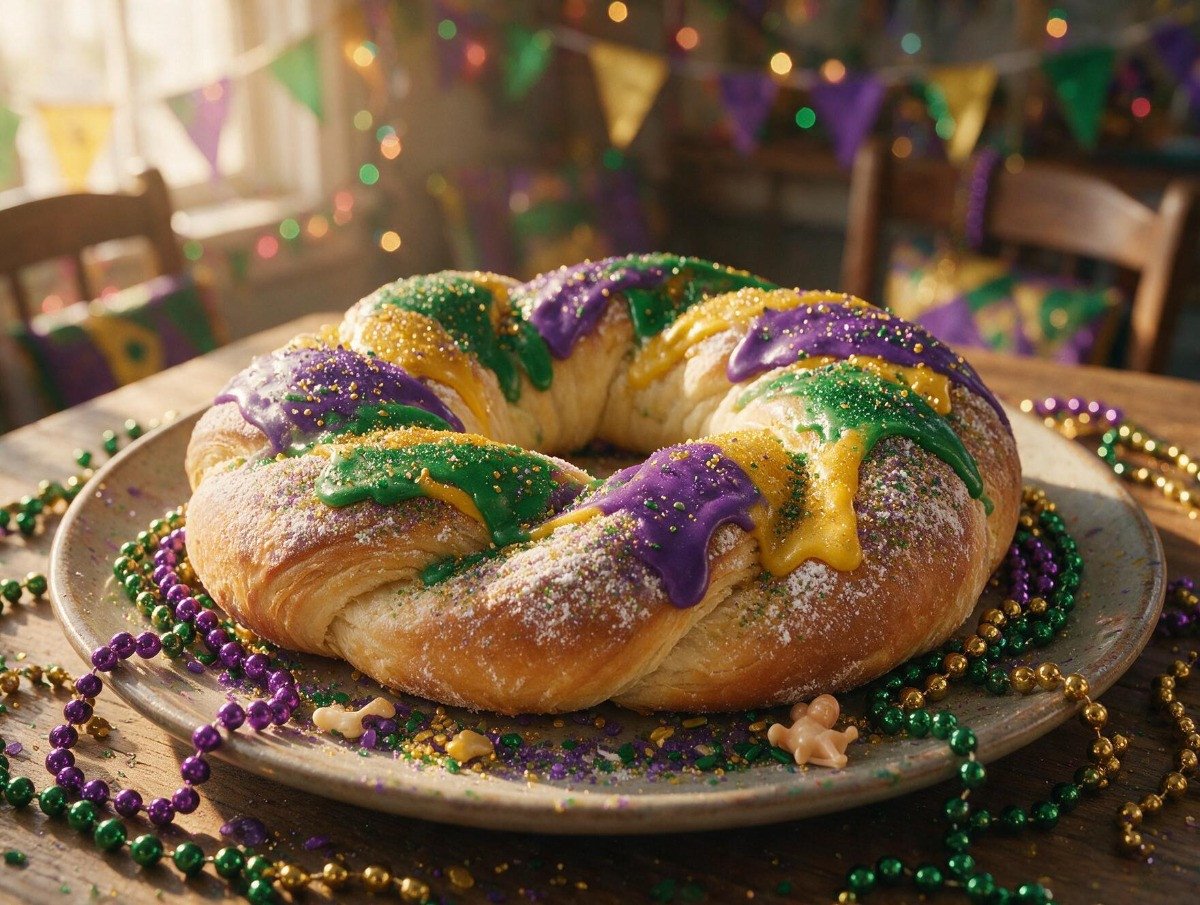
A traditional New Orleans king cake is decorated with purple, green, and gold, the official colors of Mardi Gras. Purple represents justice, green represents faith, and gold represents power. Together, the colors create the unmistakable appearance that separates king cake from nearly every other pastry on the table.
Those colors also reflect the city’s talent for turning food into spectacle. New Orleans celebrations are rarely quiet or understated, and king cake follows that same philosophy. The bright sugar catches the eye before the box is even opened fully, making the dessert feel festive before anyone takes the first bite.
The decorations are more than a finishing touch. They immediately connect the cake to Carnival, whether it is being served in a New Orleans dining room or shipped to someone hundreds of miles away. One glance at the colors is often enough to bring back memories of parade routes, marching bands, family parties, and crowded office kitchens.
What Makes a New Orleans King Cake Different?
King cakes appear in several countries and regions, but the New Orleans version has developed its own identity. It is often made from a soft, lightly sweetened dough that may resemble brioche, coffee cake, or a cinnamon roll, depending on the bakery’s recipe. The dough is shaped into a ring, baked until golden, and finished with icing, colored sugar, or both.
Texture plays an important role in a memorable king cake. The dough should be tender enough to pull apart easily while still having enough structure to support icing and filling. A cake that is overly dry can feel disappointing, while one that is too soft may lose the satisfying bite that makes each slice enjoyable. Flavor is equally important. Cinnamon is common, although bakeries may offer cream cheese, fruit, chocolate, praline, or other fillings. Randazzo King Cakes gives customers the opportunity to enjoy the familiar qualities of a traditional king cake while choosing options that fit the tastes of their family, friends, or coworkers.
The Baby Keeps the Party Going
The small plastic baby associated with king cake is one of the tradition’s most recognizable features. It represents the infant Jesus, although the modern practice has also taken on a playful social meaning. Whoever finds the baby in a slice is commonly expected to buy the next king cake or host the next party.
This simple custom keeps Carnival gatherings moving from one home or workplace to another. A person who arrives at a party as an ordinary guest may leave with the responsibility of continuing the celebration, which helps explain why some offices seem to have a fresh king cake every week during the season.
People should always check the bakery’s packaging and serving instructions, since the baby may be placed inside the cake, included separately, or intended to be inserted before serving. Regardless of where it is found, the tradition adds an element of anticipation to every slice.
King Cake Turns Ordinary Gatherings Into Events
One reason king cake fits New Orleans so well is that the city has always understood the importance of gathering around food. A routine visit with relatives can become a lively afternoon once a cake is placed on the table, while an ordinary office meeting feels less formal when everyone is debating which slice might contain the baby.
The cake also makes entertaining simple. Hosts do not need to create an elaborate dessert menu because the king cake serves as both food and decoration. Its ring shape makes it easy to slice for groups, and the colorful topping immediately establishes a Carnival atmosphere.
Even small gatherings feel connected to something larger. Sharing king cake means participating in a citywide tradition that is unfolding at the same time in homes, schools, offices, and parade parties throughout the region.
Why Are King Cakes So Popular at Work?
Workplace king cakes are practically a Carnival season institution in New Orleans. Someone brings in a cake in the morning, places it in the break room, and watches as slices slowly disappear throughout the day. Employees may stop by for breakfast, an afternoon snack, or a quick break between meetings. The hidden baby creates an ongoing joke that can involve the entire office. Some people cut carefully, hoping to avoid the responsibility of buying the next cake, while others actively search for the baby because they want to choose the next flavor. Either way, the tradition gives coworkers something enjoyable to discuss that has nothing to do with deadlines or paperwork.
King cake also works well in offices because it is easy to share. A single cake can serve a group without requiring plates full of separate pastries, and people can take a slice when their schedule allows. During a busy season, that convenience makes the cake as practical as it is festive.
Families Make the Tradition Their Own
Every New Orleans family seems to have its own king cake habits. Some wait until January 6 with absolute discipline, while others begin looking for cakes as soon as bakeries announce their seasonal menus. Certain families insist on traditional cinnamon, while others use the season as an opportunity to try several fillings.
Children often become especially invested in finding the baby. What begins as a dessert can turn into a family competition, with everyone examining each slice before taking a bite. Parents, meanwhile, may quietly appreciate that the tradition gives them a reason to schedule another gathering.
These small customs become part of a family’s Carnival identity. Years later, people may remember who always found the baby, which flavor disappeared first, or how many cakes appeared at the house during a particularly long season.
A King Cake Can Carry New Orleans Anywhere
For former residents, college students, military families, and people who simply love New Orleans, receiving a king cake can feel like opening a box filled with memories. The colors, aroma, and familiar shape offer an immediate connection to Carnival, even when the nearest parade is hundreds of miles away.
Shipping king cakes has helped transform a regional tradition into something people across the country can experience. A family in another state can host a Mardi Gras party, explain the baby tradition to friends, and introduce guests to a dessert that carries generations of New Orleans history.
Randazzo King Cakes helps customers share that experience beyond Louisiana. Whether a cake is sent as a gift or ordered for a personal celebration, it gives people a taste of the city’s culture without requiring them to stand on a parade route.
Tradition Leaves Room for Personal Taste
Respecting tradition does not mean every king cake must taste exactly the same. New Orleans food culture has always balanced history with creativity, and modern king cakes reflect that flexibility. Traditional cinnamon remains a favorite, yet filled cakes have become an important part of the season. Cream cheese offers a rich contrast to the sweet dough, while fruit fillings introduce brighter flavors. Chocolate, praline, and other dessert-inspired varieties appeal to people who want something especially indulgent. Choosing among them often becomes part of the fun, particularly when a family orders several cakes during the season.
The best choice depends on the occasion. A traditional cake may be perfect for introducing someone to the custom, while a filled variety can make a familiar celebration feel new. There is no reason to choose only one when Carnival season provides plenty of opportunities to explore.
How Should You Serve a King Cake?
King cake can be served at room temperature, which makes it convenient for parties, offices, and family gatherings. A serrated knife usually works well for cutting clean slices without pressing down too heavily on the dough or disturbing the icing.
Serving sizes can be adjusted according to the crowd. Smaller slices allow more people to participate, while generous portions make sense when the cake is the main dessert. Coffee is a classic companion, although milk, tea, and hot chocolate also pair well with the cake’s sweetness.
Any remaining cake should be stored according to the bakery’s directions, especially when it contains a filling that may require refrigeration. Proper storage helps preserve the texture and flavor, although leftovers are not always a concern when a group of enthusiastic New Orleanians is nearby.
The Cake Is Part of the Carnival Rhythm
Carnival season has its own rhythm, beginning quietly on Twelfth Night and building steadily toward Mardi Gras. King cake follows that rhythm. Early in the season, a cake may appear at a small family dinner, while the weeks closer to Mardi Gras bring office parties, school events, parade gatherings, and crowded weekend celebrations.
The cake becomes a kind of calendar. Each box opened means Mardi Gras is getting closer, and each hidden baby creates another reason to gather before the season ends. By the time Fat Tuesday arrives, many people have eaten several slices, tried multiple fillings, and shared the tradition with friends. Once Mardi Gras passes, the season ends, and the cakes disappear until the following January. That temporary nature makes the tradition feel precious, encouraging people to enjoy it fully while it lasts.
New Orleans and King Cake Belong Together
Randazzo King Cakes continues the relationship between New Orleans and its signature Carnival treat. Whether you are hosting a parade party, surprising your coworkers, sending a taste of Louisiana to someone far away, or simply celebrating at home, a king cake brings the spirit of the season directly to the table. In a city built around food, family, and celebration, it is difficult to imagine a more perfect match.