SHIPPING ORDERS FOR CHRISTMAS WILL BE AVAILABLE AFTER THANKSGIVING
TO SHIP FOR THE 2027 MARDI GRAS KING CAKE SEASON, THOSE DATES WILL BE AVAILABLE AFTER DECEMBER 27, 2026
The Evolution of Mardi Gras Music
Mardi Gras music is not one sound, one era, or one playlist that stays the same every year. It is a living soundtrack that keeps borrowing, remixing, and reintroducing itself, because New Orleans has always been a city where cultures meet in the street and create something new in real time. The easiest way to hear that evolution is to listen for what the music is doing for the crowd, since Mardi Gras has always asked music to lead, to invite, to tease, and to move people forward. The result is a tradition that feels old and fresh at the same time, depending on where you step into it.
From Street Cries to Carnival Songs
Before the city became globally famous for brass bands and jazz, New Orleans already had a habit of turning everyday life into sound. Vendors, workers, and neighbors relied on street calls, simple melodies, and rhythmic patterns that helped messages travel, which created a musical atmosphere long before a parade came into view. When Carnival celebrations grew, those habits shaped how people expected public music to function, meaning the point was not perfection, it was communication and momentum. Early Carnival sounds leaned into familiarity, because crowds respond faster when they already know how to clap, shout, and sing along.
European influences, especially French and Spanish traditions, contributed formal dance rhythms and party repertoire, yet the local version never stayed formal for long. New Orleans has always softened stiff edges by pulling music closer to the people, which is why the street became the true stage. Over time, the celebratory music around Carnival grew less like a ballroom and more like a moving neighborhood block party, where the beat could stretch, swing, and get louder as the crowd did. That early shift set up a simple Mardi Gras rule that still holds: music belongs to whoever is walking beside it.
How Did African Rhythms Shape Mardi Gras?
African musical traditions shaped Mardi Gras by shaping New Orleans itself, especially through rhythmic language that values repetition, improvisation, and conversation between performers and the crowd. Drumming patterns and syncopation created a pulse that can feel like it is leaning forward, which is exactly what a parade needs when it has to pull thousands of people down a route. Those rhythms also influenced how melodies were phrased, since the melody often behaves like a voice inside a larger groove rather than a solo floating above it. When people say Mardi Gras music makes you move without asking permission, that is rhythm doing cultural work.
Congo Square is often discussed because it represents a historical space where African and Afro-Caribbean traditions could be expressed, shared, and remembered, even under brutal constraints. The important point for Mardi Gras is not a single location, it is the reality that African-derived rhythm and movement survived, adapted, and became foundational. That foundation shows up in the way New Orleans musicians treat time, where the beat can be steady while the accents dance around it, creating that rolling feel that matches feet on pavement. Mardi Gras inherits that feeling every season, even when the instrumentation changes.
Brass Bands and the Rise of Jazz
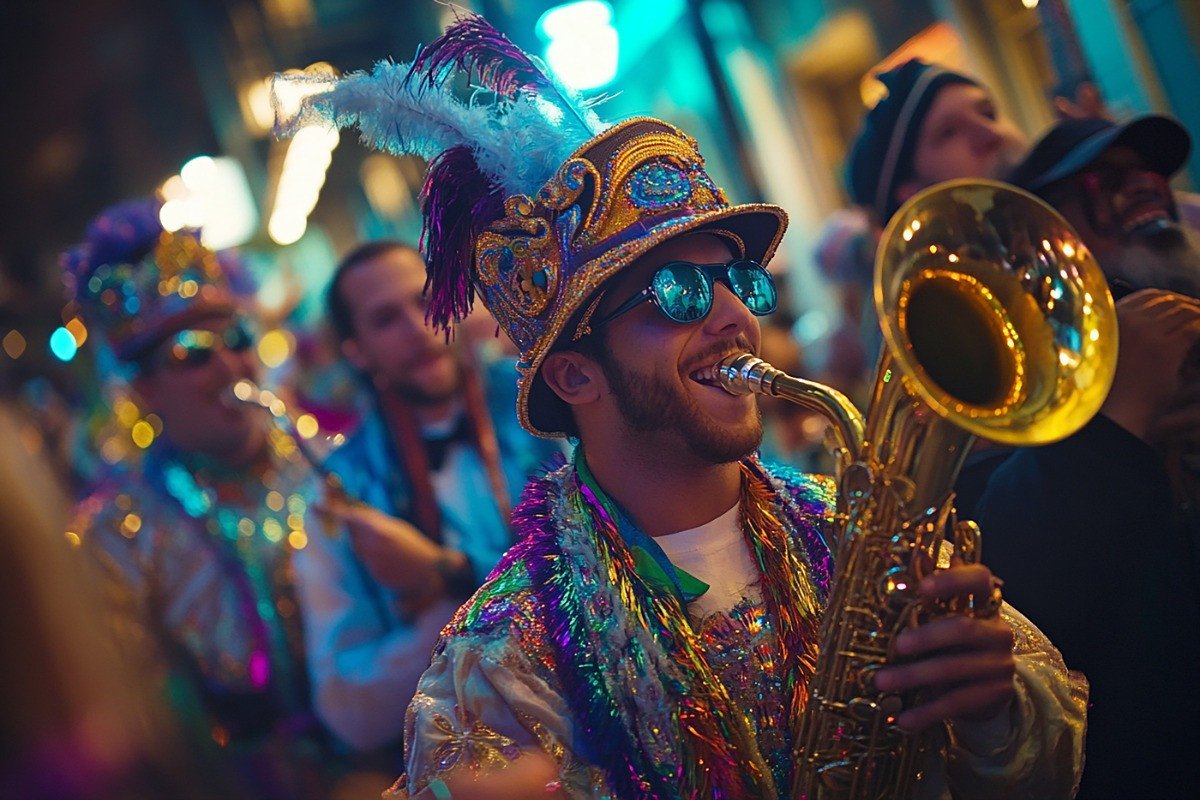
Brass bands became a public soundtrack because they can do everything a parade needs in one package: volume, melody, rhythm, and emotional lift that reaches the back of the crowd. Horns carry over street noise, drums keep the march honest, and the band can switch from triumphant to playful without stopping the forward motion. In a city full of outdoor celebrations, that practicality became artistry, because musicians learned to shape the street like a room and shape the crowd like a choir. Once brass band culture took hold, Mardi Gras gained a musical engine that could drive miles of celebration.
Jazz grew out of that same environment of competing sounds and shared influence, and it changed Mardi Gras by expanding what parade music could say. Improvisation turned familiar tunes into living conversations, which meant two parades could play similar material yet feel completely different in the hands of different players. Early jazz also brought a sharper sense of swing, where the beat feels elastic, giving dancers more space to interpret it rather than simply march to it. When you hear a horn line that seems to laugh and shout at the same time, you are hearing the DNA that made Mardi Gras music unforgettable.
What Is a Second Line, and Why Does It Sound Like That?
A second line is a moving celebration behind a lead group, often associated with social aid and pleasure clubs, where the music is built for dancing while walking. The sound is distinctive because it is designed to create lift, with snare patterns that chatter, bass drum hits that feel like a heartbeat, and horn phrases that punch through like bright streetlights. That feeling is not accidental, because the goal is to keep bodies loose and spirits high for blocks at a time. The music becomes a map for how to step, wave, and respond, even if you arrived without knowing the route.
Second line music also sounds the way it does because it prioritizes participation over polish, which means the groove must be strong enough to hold dancers who are making their own decisions. Bands often play with rhythmic emphasis to match what the crowd is doing, and the crowd answers by getting louder, livelier, and more creative with movement. This feedback loop is one reason Mardi Gras music keeps evolving, since musicians learn what works in the street and then carry that knowledge into recordings, clubs, and new songs. The second line is not just a tradition, it is a training ground for the next sound.
R and B, Soul, and the Mardi Gras Indians’ Influence
As rhythm and blues and soul became dominant popular styles, Mardi Gras music absorbed their structure, their storytelling, and their deeper pocket, which made room for songs that could live beyond parade day. The beat became heavier, the bass started to speak louder, and singers brought a new focus on hooks that crowds could shout back on command. This era helped Mardi Gras music feel less like an event-specific soundtrack and more like a seasonal genre with its own classics. When the city started leaning into this sound, Mardi Gras gained music that could fill a dance floor on Saturday night and still work on a parade route the next afternoon.
Mardi Gras Indian traditions also shaped the wider sound, especially through chanting, polyrhythms, and the emotional intensity of call-and-response. The music connected to identity, neighborhood pride, and artistry that shows up in both sound and visual culture, which gave Mardi Gras a deeper sense of meaning beneath the party. Groups like the Wild Magnolias brought Indian influences into recordings that reached broader audiences, while still reflecting the street-based roots of the tradition. This influence reminds listeners that Mardi Gras music is not only about celebration, it is also about belonging and expression.
Did Funk Turn Mardi Gras Into a Dance Floor?
Funk did not replace earlier Mardi Gras sounds, it widened the lane and made the groove impossible to ignore. Bands like the Meters helped define a tight, hypnotic rhythm that feels like it is locking you into motion, even when the melody stays simple. That groove translated perfectly to Mardi Gras, because the season thrives on repetition that builds energy rather than repetition that gets boring. Funk gave the celebration a new kind of heat, where the music could simmer for minutes and still keep the crowd hooked.
This shift also changed how Mardi Gras music was arranged, since musicians started treating rhythm as the lead voice rather than the accompaniment. Horn stabs became sharper, guitar parts turned into rhythmic engines, and drummers emphasized a feel that is both disciplined and playful. A parade with funk in its bones feels different, because people stop marching like a line and start moving like a dance floor with a destination. When you hear modern brass bands playing with funk phrasing, you are hearing a bridge between eras that Mardi Gras built naturally.
Bounce, Hip-Hop, and the Modern Parade Playlist
Modern Mardi Gras playlists reflect the same truth that shaped earlier eras: the city listens to itself, then turns what it hears into celebration. Bounce and New Orleans hip-hop brought call-and-response to a new generation, with chants and energy that fit perfectly into crowded routes and packed parties. Artists like Big Freedia helped push that sound into wider visibility, yet the core idea remains very local, because the music is built to be answered by the room. In Mardi Gras context, bounce functions like a modern parade chant, immediate and irresistible.
At the same time, the brass band scene evolved with groups like Rebirth Brass Band and the Dirty Dozen Brass Band, who showed how horns can absorb funk, hip-hop attitude, and modern production sensibilities while still sounding like the street. This blending is part of why Mardi Gras music stays relevant, since it never asks people to choose between tradition and current taste. The parade route becomes a place where older standards, newer chants, and fresh grooves can sit side by side, and the crowd accepts it because the rhythm tells them it belongs. Mardi Gras has always been a mixtape city, long before the word mixtape mattered.
How Do Musicians Keep Tradition Alive While Pushing Forward?
Musicians keep Mardi Gras tradition alive by treating the classics as shared language rather than museum pieces. A familiar melody can anchor a crowd, yet the arrangement can shift to match the moment, which is how old songs stay useful in new streets. Brass bands, for example, often rotate between traditional marches, jazz standards, funk grooves, and newer crowd-pleasers, not because they are confused, but because they understand the psychology of celebration. The tradition lives in the function of the music, meaning it has to lead people together, no matter the style.
Innovation happens because every generation grows up hearing the street, then brings its own influences back into it. Younger musicians may arrive with hip-hop phrasing, modern drum patterns, or production-inspired dynamics, while older players bring repertoire, technique, and cultural memory. New Orleans has a strong apprenticeship culture, formal and informal, which means knowledge passes down even as taste changes. Mardi Gras music evolves the way the city speaks, with elders shaping the grammar and younger voices adding new slang without breaking the conversation.
Listening Like a Local
Listening like a local starts with noticing that Mardi Gras music is seasonal, meaning certain sounds feel right because of when and where you hear them. Early-season gatherings often lean on warm, familiar grooves that let people settle into the rhythm of Carnival, while the closer you get to the biggest days, the more urgent and high-energy the music becomes. Parade-day sound tends to favor brass, drums, and chants that cut through outdoor noise, while house parties can stretch into funk, soul, and bounce without worrying about distance. When you build your own listening habits around those contexts, the evolution becomes easier to hear.
Local listening also means letting the music be social rather than private, even if you are listening alone. Mardi Gras songs are built with built-in invitations, whether that invitation is a hand clap, a shouted phrase, or a dance step you only half know. Paying attention to those invitations helps you understand why certain styles rose when they did, because the crowd always votes with its feet. The evolution of Mardi Gras music is basically the story of what people wanted to do together, year after year, on the same streets.
King Cake, Kitchen Radios, and the Sounds of the Season
Mardi Gras music often lives in the most everyday places, which is part of why it stays rooted even when it changes. Kitchen radios, car speakers, and neighborhood gatherings create the soundtrack that turns an ordinary weeknight into Carnival season, especially when someone brings home a king cake and suddenly the house feels like a party. The music is not always blasting, sometimes it is just present enough to make you sway while you pour coffee or slice a piece for a friend. Those small moments matter, because they are how traditions become normal rather than occasional.
Randazzo King Cakes fits naturally into that rhythm because king cake is one of the most dependable ways people mark the season, whether they are throwing a big party or simply bringing something joyful to the office. Music and king cake share a purpose, since both are meant to be shared, talked about, and remembered, and both turn strangers into neighbors for a few minutes. A parade might be the loudest expression of Mardi Gras, yet the season is also built on smaller rituals that repeat week after week. When you pair a slice of king cake with the sounds that have carried Carnival through generations, you are participating in the same evolution, one bite and one beat at a time.
Bring the Music Home This Mardi Gras Season
Mardi Gras season is at its best when it is shared, which is why the simplest plan is often the strongest one: put on music, invite someone over, and bring out the king cake. Randazzo King Cakes helps you anchor the celebration with a classic that belongs at the center of the table, whether you are hosting a full party or just making a normal afternoon feel like Carnival. The music brings the motion, the food brings the gathering, and the season does the rest. When you are ready to make Mardi Gras feel real at home, start with the soundtrack, then make sure there is a king cake worth singing over.